
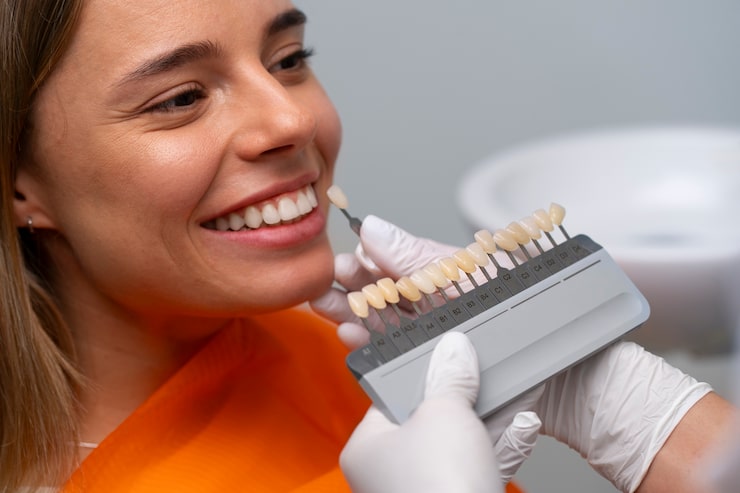
Most people think of porcelain veneers as a purely cosmetic treatment. They picture a celebrity smile—perfectly white, perfectly even. And while veneers absolutely improve appearance, they do something else that often goes unnoticed. They protect the teeth beneath them.
If you are exploring porcelain veneers in Saskatoon for chipped, worn, or damaged teeth, understanding the protective benefits alongside the cosmetic ones gives you a much fuller picture of what this treatment can offer.
What Are Porcelain Veneers?
Porcelain veneers are very thin custom-made shells that are permanently bonded to the front surface of the teeth. They are crafted from high-quality dental porcelain that closely mimics the appearance and light-reflecting properties of natural tooth enamel.
Each veneer is designed to match the surrounding teeth in colour, shape, and size—making the result look completely natural.
The placement process involves removing a very thin layer of enamel from the front of the tooth before the veneer is bonded in place. This is a permanent treatment — but one that delivers both aesthetic and protective benefits that last for many years.
How Do Porcelain Veneers Improve Smiles?
Understanding how porcelain veneers improve smiles goes beyond the obvious visual transformation.
Veneers can address:
- Teeth that are chipped, cracked, or slightly fractured
- Severe or deep staining that whitening cannot resolve
- Teeth that are worn down from grinding or acid erosion
- Uneven, misshapen, or disproportionate teeth
- Small gaps between teeth
- Mildly crooked teeth that would otherwise require orthodontics
The result is a smile that looks uniform, bright, and natural — without the need for multiple separate treatments.
Can Porcelain Veneers Fix Chipped Teeth?
This is one of the most common questions patients ask—and the answer is yes.
Can porcelain veneers fix chipped teeth? Absolutely. A veneer covers the entire front surface of the tooth, including any chip or crack. Once bonded in place, the veneer
- Conceals the cosmetic damage completely
- Seals the chipped edge to prevent the chip from growing larger
- Adds a protective layer over the weakened area
- Restores the tooth’s natural shape and proportion
Without treatment, a chip can worsen over time. The weakened edge is more vulnerable to further breaking — especially under the pressure of everyday chewing. A veneer stops that progression in its tracks.
At a dental clinic, patients with chipped or structurally compromised teeth receive a thorough assessment before veneers are recommended—ensuring the treatment is appropriate and the tooth structure beneath is sound enough to support the restoration.
The Protective Role of Porcelain Veneers
Here is what many patients do not realize—the porcelain shell itself acts as a physical barrier over the tooth surface.
Porcelain is
- Highly resistant to staining from coffee, tea, and wine
- Strong enough to withstand normal biting and chewing forces
- Non-porous — meaning bacteria cannot penetrate the surface
- Smooth — making it harder for plaque to adhere
By covering the front surface of the tooth, a veneer protects the underlying enamel from:
- Further acid erosion
- Surface staining
- Sensitivity from enamel loss
- Minor physical trauma to the tooth edge
For teeth that have already experienced some damage or enamel wear, a veneer essentially creates a new protective outer surface—giving the tooth a second layer of defence.
Do Porcelain Veneers Stain Over Time?
This is something patients understandably want to know before committing to veneers.
Do porcelain veneers stain over time? The short answer is much less than natural teeth.
Porcelain is a non-porous material. Unlike natural tooth enamel, it does not absorb pigments from food and drink in the same way. This means veneers resist the staining that comes from regular consumption of coffee, tea, red wine, and dark foods.
However, the bonding material used at the edges of the veneer can discolour over time with heavy exposure to staining substances. This is why regular professional cleanings and moderation with staining foods and drinks remain important even after veneers are placed.
How Long Do Porcelain Veneers Last?
With proper care, porcelain veneers typically last between 10 and 15 years — and many last significantly longer.
What extends their lifespan:
- Brushing gently twice daily with a soft toothbrush
- Flossing around the veneer edges every day
- Avoiding biting directly into very hard foods
- Wearing a nightguard if teeth grinding is an issue
- Attending regular dental checkups and professional cleanings
If you or a loved one does incur a problem that causes damage to the veneer, you must get in touch with an emergency dentist in Saskatoon as soon as possible to keep the underlying teeth safe. The veneer is typically evaluated and, after that, changed or repaired.
Protect and Perfect Your Smile — Lakewood Dental Is Here to Help
Porcelain veneers offer something genuinely valuable — a solution that improves how your smile looks while simultaneously protecting the teeth beneath from further damage. For patients with chipped, worn, or stained teeth, veneers represent one of the most comprehensive treatments available in modern cosmetic dentistry.
Our Lakewood Dental team at work. The dentists will start your consultation with a completely customized in-depth evaluation to understand if veneers and your desire for a bright, white smile are coupled with your current oral hygiene level. We want you to feel confident and ready as you learn what options are best for the future of your teeth. Book an appointment now and begin taking those initial steps to getting the ideal smile you’ve always dreamed of!
Frequently Asked Questions
How to protect your teeth with porcelain veneers?
Veneers create a durable, non-porous protective layer over the front surface of the tooth—sealing chips and cracks, shielding enamel from acid erosion, and providing a strong barrier against further physical damage.
Are porcelain veneers a permanent treatment?
Yes—because a small amount of enamel is removed during preparation, the teeth will always require coverage, which is why veneers are considered a long-term commitment and why thorough consultation beforehand is so important.
Can veneers be placed on all teeth or only the front ones?
Veneers are most commonly placed on the front teeth that are visible when smiling—typically the upper front six to eight teeth—as they are not designed for the heavy chewing forces that back teeth endure.
What happens if a porcelain veneer chips or breaks?
Contact your dental team promptly—a chipped veneer should be assessed quickly to ensure the tooth beneath is protected, and in many cases the veneer can be repaired or replaced without extensive additional treatment.